Showing posts with label how to. Show all posts

Tuesday, August 13, 2013

Tips to Prevent Dogs From Getting Lost


Limit Their Chance to Escape! 

Lindsey Sjouwerman – Marketing Coordinator at Speepdro Imaging Durham 

Making sure your house and backyard are dog-proof is a crucial step that many dog owners miss. All dogs are different—some dogs are lazy, but others are crafty and will do anything to get out. That could mean digging their way under your fence, jumping over it or straight up opening the latch. They may play dumb, but don’t let that lull you into a false sense of safety—unless you take precautions, all dogs will get out if they desperately want to.

The first thing to understand is what kind of dog you own: a digger, a jumper or a chewer? This will dictate how you dog-proof your backyard. Of course, there are items that all backyards should have to ensure your dog doesn’t escape:
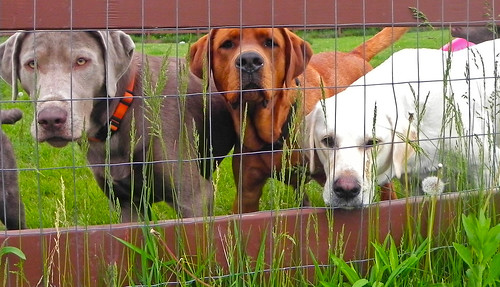
Dogs checking out the action at the fence. CC Tristan Honscheid on Flickr

  • An automatically shutting gate, widely available from any hardware store (tension in the springs forces the door closed so that you don't accidentally leave the gate open)
  • Limited access to your backyard through only one gate
  • No holes or other potential escape routes
Other options that pet owners can invest in include obedience training. The best practice of all is to practise awareness and make a conscious effort to protect your furry friends. When children share the yard, it is a bit harder to address the dangers, but try. The sheer idea of losing a dog because it got out may be enough for children to remember to close the gate or leave the dog in the house.

In my opinion, the best way to ensure the dog doesn't get out is to spend quality time with your pup. Go for walks or play fetch or any activity that will tire him or her out. Essentially, give your dog something else to look forward to. Stimulate the mind, so your dog doesn’t have to search for his or her own stimulation in the form of escape.


Friday, July 26, 2013

5 Tips to Help Cool Down Your Dog


Written by Lindsey Sjouwerman, Marketing Coordinator, Speedpro Imaging

We survive the heat, so why can’t they? The fact is that heat is extremely detrimental to a dog’s health—young or old. It's not the heat per se that will affect a young dog; it is more likely the overexertion due to puppy power. As for old dogs, it’s temperature: the heat gets harder and harder to handle as one ages, even for humans.
Mumford the Great Dane stays cool in a Cool Coat
(available through www.mustluvdogs.ca).

As pet owners, we need to be well prepared and informed about how our animals respond to the heat. Each dog is different and requires unique attention. Below I share some of the tricks that have kept my dogs cool in the summer and that ensure they stay hydrated.

1. This is by far the funniest to watch—entertainment for you and a refreshing game for your pooch. Freeze a bowl of water with some of their favourite toys inside. The toys create a desire to lick the ice until they're free.

2. Dog pools are a great way to cool down and have some splashing good fun—for young or old. The pools are shallow enough that dogs can lie down and rest their heads on the ledge.

3. Trim excess hair—especially if your furry friends are seriously hairy. Some dog breeds aren’t supposed to be shaved, so do your research. A haircut will be glorious for your four-legged friend!
4. Cool eats. There are some fruits and vegetables dogs can safely eat and that can be served cold. My pooch absolutely loves apples. The more the better—he eats the whole thing, seeds and all. Feeding dogs cold fruits and veggies helps cool them down internally, while also giving them some energy if they haven’t eaten because of the intense heat.

5. Cooling blankets are another great idea for all dogs, especially for dogs that have skin issues—like hot spots. Cooling blankets are dampened wraps that you put on your dog. Although the fabric is damp, the dog doesn't get wet. They work by evaporation, bringing down the external temperature of the dog, often by 15-20 degrees. Check out the website to learn how a Cool Coat is effective for your dog.

Monday, July 15, 2013

The Joys of Walking Your Dog

The Dog Daily: Health Care

By Liz Palika for The Dog Daily
Many dog owners seem to feel that walking their dog is something that must be done; a chore that goes along with dog ownership. But walking your dog doesn't have to be a chore—it can be so much more. When you're out walking your dog, you are spending time together, interacting with each other, and sharing the sights and sounds of the world around you.

The Joys of Walking Your DogThe time spent walking your dog is also a great time to refresh training skills. Obviously, walking your dog is no fun if she is dragging you down the street, so teaching her to walk nicely on the leash is a good skill to emphasize. Have a few treats in one pocket, or if your dog isn't really motivated by treats, take a favorite small toy. When your dog begins to surge forward on the leash (before she is pulling hard), show her the treat or toy, tell her "Sweetie, watch me!" and make a 180-degree turn. Use the treat or toy to make sure she turns with you, and praise her, "Good girl! Super!" Give her the treat or let her play with her toy for a few moments. After a few surprising turns, she will begin to keep an eye on you when you're out walking. When she does, praise her.

Walking your dog is a wonderful time to meet and greet your neighbors. To protect your neighbors from your dog's enthusiastic greetings and dirty paws, teach your dog to sit when people greet her by holding her collar with one hand and tucking her hips under her with the other hand. Don't let your neighbors pet her while she's misbehaving; that would reward her bad behavior. However, once she's sitting (even if you have to help her do it), your neighbors can greet her and make a fuss over her.

You can also give your dog a job to do while walking. You might be amazed at how much satisfaction your dog will get from something as simply as carrying some of your junk mail home from the mailbox! Put a rubber band or two around several pieces of junk mail or advertisements, making the mail into a tube shape. Hand it to your dog and tell her, "Take it!" and encourage her to follow you with it. Praise her, "Good girl to take it! Super!" Begin by having her carry it just a few steps and make a big deal over her efforts. With praise and encouragement, she will be able to carry it longer, or even to carry a small bag home from the grocery store.

Walking your dog is so much more than just a chore. While walking your dog you are outside in the fresh air, you're getting some exercise, you're meeting people and you're practicing your dog's social and training skills. All these things are wonderful ways to strengthen your relationship with your dog.

—Liz Palika

Monday, June 10, 2013

How to Deal With Separation Anxiety in Pets

Many owners face a pet's separation anxiety at one point, especially if their beloved pet is a rescue dog. Our pets become anxious because they don't understand why we can't just stay and play with them all day instead of going to work.
Source: quickmeme.com

Source: The Animal Guardian Society's website. 

Symptoms of Separation Anxiety:
  1. Whining, howling, barking
  2. Destructive chewing
  3. Urinating or defecating in the house
  4. Licking or chewing their own paws
5 Tips to Help Them Overcome Separation Anxiety
  1. Don’t make a fuss: Come and go from the house without making a big fuss over your dog, and don’t say things like, “Mommy’s going to work now, but I’ll be home soon, so be a good dog,” before you leave. Leaving your house should just be treated as regular,   everyday behaviour that is no big deal. The really hard part is coming home. Your dog will be so happy to see you, but you need to ignore him for 5 to 10 minutes when you get home. Once your dog has calmed down, you can greet him and say hello. Practise leaving for short periods of time, and build up to longer absences.
  2. Exercise: It sounds easy because it is. If your dog is good and tired, she’ll just rest until you get home instead of releasing all of her pent-up energy by being destructive.
  3. Crate train your dog: This can be an important step, especially if your dog is a destructive chewer when left alone. Not only will the dog cause damage to your belongings, but more importantly, your dog could hurt himself or swallow something dangerous. When used properly, the crate will feel like a safe place where your dog will be comfortable awaiting your return. Click here to read more about crate training.
  4. Distractions: Try leaving the TV or radio on for your dog. Hearing human voices throughout the day can be comforting. Classical music usually works well. Toys can be another good distraction for your dog. You can try stuffing a bone or a Kong with treats and peanut butter or Cheese Whiz and giving it to the dog before you leave. (If you put it in the freezer beforehand, this treat will last even longer.) Also, there are a lot of toys on the market that are designed to make your dog work to get at the treats inside. These are good options because they keep her busy and distracted from the thought of your absence. You can try other games as well, such as hiding treats and toys around the house so she has to spend time looking around to find them. The idea is to make the dog tired from her search so she will be more relaxed waiting for you to get home.
  5. Bach flower remedies: A mixture of these herbal remedies made from flower extracts can be helpful for some dogs to help ease their anxiety. These are usually more successful when some of the other techniques are used in conjunction with them. Click here to read more about Bach flower remedies.
If you are wondering what kind of exercises you could do with your dog, think no more! The Animal Guardian Society is launching agility classes in June. Click here to sign up.

Monday, May 20, 2013

How to Prepare Your Dog for the Fireworks

This article originally appeared in our official newsletter for the month of May. To get more informative articles and sweet tales from the life of a rescue group, sign up for our newsletter today!


Caution: Seasonal Noise Aheadthunder

The arrival of hot weather and national holidays (like Victoria Day) aren't always reasons to celebrate. Especially for noise-phobic dogs.

For them, hot weather means thunderstorms. National holidays mean fireworks. And these phenomena can mean reactions ranging from anxious panting to panic attacks. It may also mean trembling, drooling or whining; pacing or barking; urinating or vomiting.

If you own a dog with such nervousness, it means bearing helpless witness to your pet's extreme fear. Fortunately, there are various ways to deal with your animal's distress. The first is to defuse the situation before it begins. Play a tape of the sounds of thunder (or fireworks) at a low volume for brief intervals, adjusting the volume according to your dog's responses. But if a thunderstorm or fireworks display has already started, there are several coping strategies you can try:
  1. Divert your dog's attention. Turn on the radio or TV, engage in some active games, and be generous with the treats. 
  2. Provide your dog with a dark, comfortable place to hide, such as a dog crate, the inside of a closet or a folded blanket under the bed. Being tucked away in a small, snug space allows your dog to feel more secure and muffles the noise outside.

  3. Buy dog-appeasing pheromones (their scent is similar to those released by nursing mother dogs), available in sprays, diffusers and collars.
  4. Bind a form-fitting, fabric wrap or thick, woven shirt tightly around your dog. Both garments are meant to touch certain pressure points in your dog's body, slowing down the heart, reducing knots of tension and helping to promote relaxation. 
If, however, your pet's anxieties escalate, there are two remaining alternatives: working with a qualified dog therapist to learn behaviour modification techniques or asking your vet to prescribe an anti-anxiety medication.

But, whichever path you choose, follow it with kindness, patience and love. Think back to the sounds that frightened you as a child, and you'll know just how your precious pet is feeling.

This article originally appeared in our official newsletter for the month of May. To get more informative articles and sweet tales from the life of a rescue group, sign up for our newsletter today!
 

Monday, February 25, 2013

A Microchip Session in Photos

TAGS can microchip your pet for only $30 at various Pet Valu locations. Find out more about microchipping from this blog post or visit our website for microchipping dates.

Promotional poster
Promotional poster of one of our microchip clinics
Waiting for customers
TAGS volunteers (and Boomer) waiting for customers
TAGS bulletin board
TAGS bulletin board at the entrance of the clinic
Needle
Needle (still in the protective cap) attached to a plunger gun
Needle close-up
A close-up of the needle
First microchip
This cat came to get his microchip!
Check for microchip
First, we make sure he doesn't already have a microchip.
Rub the area
We rub some alcohol in the area where the needle will be inserted.
Click on the video to see how fast and painlessly we insert the microchip! It takes no more than eight seconds!

Friday, February 15, 2013

How to Start Fostering with TAGS: FAQ

Are you considering fostering but don't know where to start? TAGS volunteers and foster parents are ready to help you set up for your first experience saving a dog's (or cat's) life!

How do I know if I qualify to be a foster parent?
Do you love pets? Do you have a house or an apartment with enough space in it? Do you have enough time to walk your foster dog and spend quality time with him or her on a daily basis? If your answers are yes to these questions, then you probably qualify.

Finding a perfect foster match is an important part of the foster program. By getting to know foster families better, we can help to choose the foster dog or cat that best suits the family. Foster animals come from all walks of life, some with history, most without. As is our goal with our adoption process, we want to work with our foster families to ensure that their experience as a foster is one that proves to be rewarding. 

What do I need to do to apply?
First, fill out this application form. 

Is this considered a form of volunteering?
Yes! Many people are not able to make time for volunteering in the traditional way, but fostering is a great opportunity for you to help out without having to change your daily routine a whole lot.

What if I already have a dog?
That shouldn't be a problem. It often even helps to have another dog for your foster dog to socialize with. 

What if I have a cat that doesn't like dogs? 
You can either try to slowly allow your cat to get used to the presence of a dog or foster a suitable cat.
 
Can I foster only cats?
Yes! If you prefer, you can apply to be a foster home for cats. TAGS doesn't have many, but there is always a need to save some. 

How fast will I get a dog?
It depends. Almost daily, we get notifications about dogs that are available to take from pounds, so it could happen as quickly as a couple of days after approval.

Are these dogs vetted/groomed before or after I get them?
We always try our best to have the new dogs checked out by a vet beforehand. However, sometimes there are emergency cases, in which we must place a dog somewhere before he or she gets a veterinary appointment.

How much of the expenses are covered by TAGS?
100% of the expenses are covered by TAGS, including medical care, food and treats, bedding, grooming and training.
 
What kind of dog food does TAGS use?
TAGS uses high-quality dog foods.


Some people foster lots of dogs! Quin & Rye (on the right&middle) 
are adoptable
How do I attain the dog food?
You can pick up your share from our dog park. Please ask for directions.

What other duties do I have as a foster parent?
Other than providing a loving foster home and doing some basic training (our training experts can help) with your foster dog, you are required to transport your pet to either the Whitby or Oshawa location of PetSmart for a dog showcase at least once a month. TAGS presents its adoptable pets at PetSmart every weekend so that people can get to know our organization and animals a little better.

There are also other events to which you may be required to bring your foster dog—for example, TV promotions or a puppy room event for university students, if your schedule allows.

Can I rename my foster dog?
Yes. Actually, our foster parents made up a Scrabble-like game to give more creative names to the newcomer dogs. But if you want, you can keep his or her original name.

What if I want to adopt my foster dog?
TAGS has a rule that you cannot adopt your first foster dog. But you can adopt your second (or any subsequent) one.

It's important to understand that by fostering, you are saving not just the fostered dog's life but potentially the life of another dog, too, who is still in a shelter waiting for a foster home to become available.


If you have any other questions, please let us know in the comments section!

Friday, January 25, 2013

Scrub a Dub Dub: Tips for When Your Dog Is in the Tub

Depending on your dog's opinion of baths, or just water in general, giving them a scrub in the tub can be a quick routine procedure or it can feel as drawn-out as waiting for a four-year-old to finish her vegetables. Either way, you can expect to get wet!

Probably looks half the size she was pre-bath!
CC image courtesy of Fauxen
While giving your dog regular baths is an important part of their grooming, too many shampoo sessions can dry out their skin, especially if you aren't using gentle pet shampoo. As you get to know your dog, you'll likely come up with a loose schedule based on his or her coat length, odour, time spent outdoors, and breed.

When you've decided it's time to get down and dirty clean, gather all of the supplies you will need and extra towels to put on the floor. Before you add water to the equation, give your dog a thorough brushing to get out tangles, loose fur, and debris.

Bathing Your Dog: A Step-by-Step Guide

1. Smile! Make sure you are cheerful and calm as you lead your dog into the tub or washbasin, and do your best to stay this way throughout the rest of the steps to show him that bath time is fun time! That said, don't forget to close the door so that he doesn't have an escape route.

2. Add water! Fill the tub with a few inches of warm water (but not more than this because high water levels could add to any anxiety he is feeling and will increase the likelihood of him trying to escape), and use a pail or pitcher to gently pour the water on him, starting just behind the head.

Small dogs can be bathed in the sink.
CC image courtesy of tsheko
3. Scrub! Once your pup is wet, start massaging shampoo into his fur, working from the neck down along the back to the belly and the legs. It's best to avoid shampooing the face and ears—just wipe those parts with a wet cloth if needed.

4. Rinse! Rinse him thoroughly with the same technique you used in Step 2. (If you are using a conditioner, apply it as directed on the bottle, comb it through the fur, and rinse again.)

5. Brace yourself! If you're in the bathroom, pull the shower curtain closed so that when he shakes, the water is somewhat contained (although, at this point, your efforts to stay dry might be futile).

6. Towel off! Towel dry your pooch and let him get out of the tub. Make sure that you wring out his tail and dry in and around every paw before you let him loose in the house. If he has a long coat and the towel-drying has made him look a bit ruffled, comb him again.

7. Celebrate! Reward your dog with a treat or two for his good behaviour.

Bonus tip: It's always a good idea to make sure your dog is completely dry before you let him back outside after bath time because dirt will stick to him even more than before! In the winter, this is even more important because the cold temperatures could leave your pup damp for hours. Brr!

Was this easier said than done? Just remember that no matter what happened, it was easier than trying to bathe a cat!

Monday, January 21, 2013

Dear TAGS: What's the best method against pulling?

Hilary asked:


I have had a few people recommend a certain way of putting on our dog’s leash to reduce his pulling. Basically it's as follows: run the leash along the dog’s back to its hips; wrap the leash around the dog’s waist under its belly and loop the leash through itself to make a slip tie (it has a special name but I can't remember what!). This technique has worked wonders for us and results in much less pulling; however, my husband is concerned about the pressure of the leash on our dog’s waist/hips. What is your take on this technique? Do you recommend it?

Our certified trainer answered:

To find out if that method of using a leash could harm your dog, you should consult your veterinarian. However, there are many other options available that will most certainly help you keep your dog from pulling.

One of the primary reasons people attend our classes is to address a dog that pulls them off their feet or acts “aggressive” on leash. If you haven’t yet taken an obedience class, you could start with that.

But there are also great tools on the market to help you teach your dog how not to pull. Which one is right for you is a personal decision.

Dog with gentle leader. CC image courtesy of krossbow on Flickr.
I have always used the veterinarian-developed Gentle Leader head halter.  When the Gentle Leader first hit the market, it was sold only through veterinarians and trainers, who would ensure a proper fit for the dog. Now pet stores are selling them, and I have a concern that they are not fit and used properly. The principle behind the Gentle Leader is simple: control the head, control the dog.

Several years ago, anti-pull harnesses hit the market. They offered a different approach. Rather than using a halter-style, the harness was designed to cover the dog’s body to reduce the dog from pulling. They work well, and I have never heard of any issues with them. Again, remember these are special harnesses for teaching dogs not to pull; they are not a regular-style harness, which will make some dogs pull more.
Dusty pulls a lot less with this special type of harness

In the old days, choke collars were used, and we were taught to “correct” the dog by snapping the chain until the dog responded to our command. I would never use a choke collar or a pinch collar! Why would we use tools that can harm our dogs and that most pet owners do not use correctly?

So, ultimately, what is the goal? Most owners are happy to use the tool that eliminates the pulling—end of story. As a trainer, though, I ask, Is your dog learning? Tools should be used to teach your dog. And they must be used correctly. Walks are opportunities for training, challenging and rewarding your pet. Make the most of them!

If you have any questions concerning your pet, send us an email or ask it on Facebook or  Twitter or in the comment section below.

Friday, January 18, 2013

Top 5 Fun Winter Activities to Do With Your Dog

Despite the weather getting colder and colder, make some time to exercise with your dog. When it's mild and calm outside (usually right after it snows), grab your jacket and your dog and get out of the house for some playtime! 

Aside from the usual snowball throwing, there are other creative ways to tire the dog (and yourself) out.

Dawson is up for adoption. Like his photo on Facebook!

1. Hide-'n'-seek. Dogs are just like kids: they love to play hide-'n'-seek. Hide somewhere and call your dog's name until he finds you. It's a good practice for his obedience training, too.

2. Play in the snow. Your dog will find it hilarious to see you lie down and make a snow angel next to him. He will probably want to help you, so watch out for his wet kisses and cold nose!

3. Run. Race to the park with your dog. Dogs love a challenge! They love to get their muscles moving, and they are surely in need of some exercise after being in the house all day.

4. Under the snow. If you have durable, water-repellent gloves, then grab a stick and shove it under the snow. Start moving the stick right under the surface of the snow level so that your dog can see the movement. He'll have great fun trying to catch the mysterious, hidden object!

5. Socialize. Arrange a play date with a friend who also has a dog. Dogs are social beings who like to spend time with fellow furry friends. Let them chase each other and play games while you catch up with your friend!

These simple games do not require any tools that you have to purchase. However, you should always make sure that your dog is warm enough during your playtime, especially if he has short hair. Also, check the roads beforehand to determine whether walking on them is safe for your dog (salt or ice can be dangerous). Have fun!


Blogging tips