Showing posts with label prevention. Show all posts

Monday, November 11, 2013

Sign Up For Our Pet First Aid Course!

You cannot predict when an accident will happen to your pet, but you can most certainly be prepared for it- especially as the cold weather and the holidays are approaching since the number of injuries usually increases at this time of the year. Remember these useful tips when you find yourself in this situation:
Roxy is available for adoption.
  1. Don’t panic. Staying calm and acting quickly are key. If you manage to make decisions fast, you could get ahead of the problem, preventing it from becoming more serious. 
  2. Console your dog. Talk to him or her using a calm and relaxed tone in your voice. Your animal is just as much in shock as you are, so it’s your job to make sure he or she is in a resting position. 
  3. Move your dog carefully. If necessary, always move your injured dog as smoothly as possible, especially when you are about to transport it. Make sure to support his or her head in the case of head injuries or trauma. 
  4. Stop the bleeding. Stop bleeding by putting pressure on the wound with your finger or a bandage. 
  5. Remove everything that’s blocking the airway. Clean your dog’s mouth of excess saliva, vomit or blood to make space for the air-flow. Apply CPR if necessary. 
Enroll now in our Pet First Aid Course to find out more details and to gain practical experience that could save your pet’s life one day! Taught by Dr. Tanya Varley, a certified veterinarian the course runs from 9:30 a.m. to 4:30 p.m. Coffee breaks and a free lunch are included. 

Don’t forget to bring your pet!
Location: Quality Suites, Bloor and Grandview, Oshawa.
Date: Sunday, November 24
Cost: $99

E-mail us here or call us (905-263-8247) to register!

(This post was written by Audrey)

Tuesday, August 13, 2013

Tips to Prevent Dogs From Getting Lost


Limit Their Chance to Escape! 

Lindsey Sjouwerman – Marketing Coordinator at Speepdro Imaging Durham 

Making sure your house and backyard are dog-proof is a crucial step that many dog owners miss. All dogs are different—some dogs are lazy, but others are crafty and will do anything to get out. That could mean digging their way under your fence, jumping over it or straight up opening the latch. They may play dumb, but don’t let that lull you into a false sense of safety—unless you take precautions, all dogs will get out if they desperately want to.

The first thing to understand is what kind of dog you own: a digger, a jumper or a chewer? This will dictate how you dog-proof your backyard. Of course, there are items that all backyards should have to ensure your dog doesn’t escape:
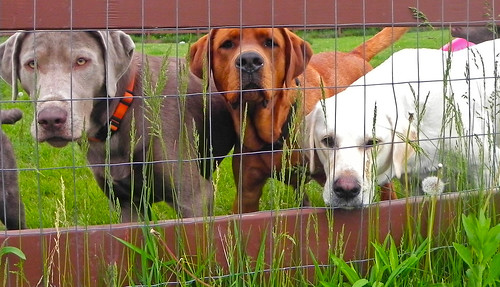
Dogs checking out the action at the fence. CC Tristan Honscheid on Flickr

  • An automatically shutting gate, widely available from any hardware store (tension in the springs forces the door closed so that you don't accidentally leave the gate open)
  • Limited access to your backyard through only one gate
  • No holes or other potential escape routes
Other options that pet owners can invest in include obedience training. The best practice of all is to practise awareness and make a conscious effort to protect your furry friends. When children share the yard, it is a bit harder to address the dangers, but try. The sheer idea of losing a dog because it got out may be enough for children to remember to close the gate or leave the dog in the house.

In my opinion, the best way to ensure the dog doesn't get out is to spend quality time with your pup. Go for walks or play fetch or any activity that will tire him or her out. Essentially, give your dog something else to look forward to. Stimulate the mind, so your dog doesn’t have to search for his or her own stimulation in the form of escape.


Monday, May 20, 2013

How to Prepare Your Dog for the Fireworks

This article originally appeared in our official newsletter for the month of May. To get more informative articles and sweet tales from the life of a rescue group, sign up for our newsletter today!


Caution: Seasonal Noise Aheadthunder

The arrival of hot weather and national holidays (like Victoria Day) aren't always reasons to celebrate. Especially for noise-phobic dogs.

For them, hot weather means thunderstorms. National holidays mean fireworks. And these phenomena can mean reactions ranging from anxious panting to panic attacks. It may also mean trembling, drooling or whining; pacing or barking; urinating or vomiting.

If you own a dog with such nervousness, it means bearing helpless witness to your pet's extreme fear. Fortunately, there are various ways to deal with your animal's distress. The first is to defuse the situation before it begins. Play a tape of the sounds of thunder (or fireworks) at a low volume for brief intervals, adjusting the volume according to your dog's responses. But if a thunderstorm or fireworks display has already started, there are several coping strategies you can try:
  1. Divert your dog's attention. Turn on the radio or TV, engage in some active games, and be generous with the treats. 
  2. Provide your dog with a dark, comfortable place to hide, such as a dog crate, the inside of a closet or a folded blanket under the bed. Being tucked away in a small, snug space allows your dog to feel more secure and muffles the noise outside.

  3. Buy dog-appeasing pheromones (their scent is similar to those released by nursing mother dogs), available in sprays, diffusers and collars.
  4. Bind a form-fitting, fabric wrap or thick, woven shirt tightly around your dog. Both garments are meant to touch certain pressure points in your dog's body, slowing down the heart, reducing knots of tension and helping to promote relaxation. 
If, however, your pet's anxieties escalate, there are two remaining alternatives: working with a qualified dog therapist to learn behaviour modification techniques or asking your vet to prescribe an anti-anxiety medication.

But, whichever path you choose, follow it with kindness, patience and love. Think back to the sounds that frightened you as a child, and you'll know just how your precious pet is feeling.

This article originally appeared in our official newsletter for the month of May. To get more informative articles and sweet tales from the life of a rescue group, sign up for our newsletter today!
 

Monday, January 21, 2013

Dear TAGS: What's the best method against pulling?

Hilary asked:


I have had a few people recommend a certain way of putting on our dog’s leash to reduce his pulling. Basically it's as follows: run the leash along the dog’s back to its hips; wrap the leash around the dog’s waist under its belly and loop the leash through itself to make a slip tie (it has a special name but I can't remember what!). This technique has worked wonders for us and results in much less pulling; however, my husband is concerned about the pressure of the leash on our dog’s waist/hips. What is your take on this technique? Do you recommend it?

Our certified trainer answered:

To find out if that method of using a leash could harm your dog, you should consult your veterinarian. However, there are many other options available that will most certainly help you keep your dog from pulling.

One of the primary reasons people attend our classes is to address a dog that pulls them off their feet or acts “aggressive” on leash. If you haven’t yet taken an obedience class, you could start with that.

But there are also great tools on the market to help you teach your dog how not to pull. Which one is right for you is a personal decision.

Dog with gentle leader. CC image courtesy of krossbow on Flickr.
I have always used the veterinarian-developed Gentle Leader head halter.  When the Gentle Leader first hit the market, it was sold only through veterinarians and trainers, who would ensure a proper fit for the dog. Now pet stores are selling them, and I have a concern that they are not fit and used properly. The principle behind the Gentle Leader is simple: control the head, control the dog.

Several years ago, anti-pull harnesses hit the market. They offered a different approach. Rather than using a halter-style, the harness was designed to cover the dog’s body to reduce the dog from pulling. They work well, and I have never heard of any issues with them. Again, remember these are special harnesses for teaching dogs not to pull; they are not a regular-style harness, which will make some dogs pull more.
Dusty pulls a lot less with this special type of harness

In the old days, choke collars were used, and we were taught to “correct” the dog by snapping the chain until the dog responded to our command. I would never use a choke collar or a pinch collar! Why would we use tools that can harm our dogs and that most pet owners do not use correctly?

So, ultimately, what is the goal? Most owners are happy to use the tool that eliminates the pulling—end of story. As a trainer, though, I ask, Is your dog learning? Tools should be used to teach your dog. And they must be used correctly. Walks are opportunities for training, challenging and rewarding your pet. Make the most of them!

If you have any questions concerning your pet, send us an email or ask it on Facebook or  Twitter or in the comment section below.

Friday, December 28, 2012

New Year's Eve Fireworks—What to Do If Your Dog Runs Away

Fireworks - CC image courtesy of bortescristian on Flickr
New Year's Eve is almost here, and so is snow and freezing cold! You have to leave the house with several layers of clothing just to make sure you won't get cold. Does it sound familiar? Imagine if you are not prepared at all and have to spend some nights out there in a snowstorm. A runaway pet might face a situation like this.

It's very important to make sure that your dog (or even cat) is in a warm, cozy and secure area during the night of New Year's Eve. It's a lot of fun for people to put on fireworks displays, but our pets may not feel the same. Some more sensitive dogs or cats can get so frightened by all the noises that they decide to run away from all this craziness.

Tips to Prevent Pets From Running Away:
- If your dog is an outside dog, double-check any weak parts of the fence.
- Give him or her warm blankets for extra coziness in the doghouse. With all the noises going on on the streets, your dog might feel safer in his or her comfy hideaway.
- Play or walk with your dog in the afternoon so that he or she will sleep deeper at night. 

8 Tips If the Dog Has Already Run Away:
1. Don't panic! First of all, put some water and a blanket by the part of the fence where the dog escaped from, just in case he comes home. 

2. Call up some of your friends and start exploring the neighbourhood. 

3. At least one person should stay at home to keep an eye on the property and the street and to be available in case someone returns the dog or calls the number on his tag.

Dog hiding from fireworks - CC image courtesy of Dave Parker on Flickr
4. When out on the search, call his name out and have a treat ready. Be extra careful around busy areas, though. You don't want your dog to see you and start crossing the road with the risk of being hit by a car. If you spot him, try to approach him without his noticing you.

5. Don't forget to take his leash, water and a blanket with you so that you can help him right away when you find him. Read our cold weather tips for dogs. Additionally, a flashlight for searching culverts, etc., and a squeaky toy to draw him out can come in handy.

6. Make sure you have your veterinarian's or an animal hospital's number with you. Roaming the streets alone in the dark is very dangerous for any dog. Read about dog first-aid here or here.

7. If he's been missing for more than a day, start putting "missing dog" posters out in your community and run a listing in the local newspaper. Register him on helpinglostpets.com and post his picture on Facebook and Twitter. Ask your friends to share it so more locals will see it.

8. Contact the local shelters and let them know about the situation so they can call you as soon as someone shows up with your dog.

Friday, November 9, 2012

Pet Cancer Prevention Tips


Dos and don’ts

November is national Pet Cancer Awareness Month. Many people don’t realize that their beloved pets are just as likely to get cancer as humans are. Unhealthy processed foods and environmental factors are most often the cause of tumours developing in our pets’ body. While it’s more common for dogs to get cancer, but that also means, that cats can, too, and because cats tend to mask illnesses, it’s harder for us to see if our cat is sick. But the signs are the same in both species: tiredness, lethargy, weight loss, vomiting, coughing or evidence of pain. 
What is more important, however, is trying to prevent this terrible disease from taking hold in your pet. Here are some dos and don’ts for keeping our dogs in good health.
Food
Dos

    CC image courtesy of photofarmer on Flickr
  • Give your dog dark green vegetables (e.g., broccoli, asparagus, lettuce) a few times a week.
  • TAGS recommends natural dry foods that have the AAFCO guarantee along with vitamins E and C.
  • Add a tablespoon of flaxseed oil to your dog’s food (it’s high in Omega 3 fatty acids, which help maintain a healthy immune system).
  • Enrich your dog’s diet with antioxidants such as a tablespoon of ground flax seed.
  •  Add coconut oil to your dog’s food (it contains fatty acids).
  • Add a small amount of minced garlic to your dog’s dinner (great cancer-inhibiting element).
  • If you prefer to make your dog’s food yourself, then be sure to use organic ingredients that are free from pesticides and drug residues.
Don’ts
  • Don’t give your dog dry foods that contain artificial flavours or artificial colours.
  • Don’t feed your dog grain-based food, because dogs have a hard time digesting grains, especially uncooked ones, and a regular diet  of them can lead to serious problems like organ failure or cancer.


Environment and Habits 
Dos
  • Consider making your lawn and garden organic.
  • Keep your dog in good condition by engaging him or her in sports or other activities.
  • Vaccinate your dog with only the necessary vaccines (vaccines stimulate the dog’s immune system in a way that can cause fibrosarcoma).
  • Install a water filter to avoid pets’ consuming fluorides.
  • Massage your dog from the feet toward the heart to stimulate circulation.
Don’ts
  • Don’t smoke in the house or around your dog – second-hand smoke is as dangerous for animals as it is for humans.
  • Don’t walk your dog behind idling cars or trucks. Gas and diesel emissions will be picked up by your dog’s nose a lot faster than they are picked up by ours.
  • Don’t let your dog sniff chemically treated grass.
  • Don’t use household chemicals, especially if the label states “Keep away from children and pets.”

Blogging tips